The capital program includes the funds used to invest in maintenance plus any improvements and expansions of the system. The 2026–2030 Five Year Regional Capital Program totals $9.246 billion in planned improvements focused on returning the system to a state of good repair, making all stations accessible, transitioning to zero-emissions and providing limited expansions and upgrades.
The NITA Act adds capital funding, but more investment is needed
Major investments across CTA, Metra, and Pace will occur during the the 2026-2030 Capital Program thanks to investment from state and federal sources, including the CTA Red Line Extension, modernization of Metra’s rolling stock and bridges, electrification of CTA and Pace’s bus fleets and facilities, and continued work to make all CTA and Metra rail stations accessible. These projects will not only strengthen service reliability but enhance access to opportunities throughout the region and improve the day-to-day rider experience.
Despite these investments, the long-term capital needs of a large legacy transit system like Chicago are great. The 10-year regional capital funding need articulated in the report is $44.6 billion. NITA’s Strategic Asset Management group has calculated that it would take an annual investment of $4 billion per year over the next 20 years to bring the system into a state of good repair and additional funds are needed to expand and improve the existing system. The current five-year program averages less than $2 billion per year, leaving a big gap compared to the capital need. The current capital program relies heavily on CTA bonds, which has proven to be an unsustainable funding source. The region needs to continue to develop more sustainable funding streams to increase capital funding to maintain and improve the transit system.
The NITA Act includes new capital revenue in the form of interest on the Road Fund balance, which means an additional $180 million for the NITA region annually. That increase is not reflected in this budget but will be added to the program through the capital budget amendment process in 2026.
Where does capital funding come from?
How is capital funding spent?
Where does capital funding come from?
Capital funding comes from a variety of federal, state, and local sources. The federal government, through the Federal Transportation Administration (FTA) provides both formula and discretionary funds to the region. The state provides both bond funds (when new state capital programs are enacted) as well as gas tax revenue referred to as “PAYGO”. Local sources include bond issuances by both NITA and the Service Boards as well as funding pools made available through various local governmental sources. The region continually advocates for additional funding to meet the great need to both maintain and improve the system. Recent efforts have resulted in over $425 million a year in sustainable additional funding.
The Infrastructure Investment and Jobs Act, signed into law on November 15, 2021, is a significant investment in the nation’s transit infrastructure. It provides nearly 40% more funding per year in federal formula funds, which amounts to over $200 million per year. The legislation also authorizes several new transit discretionary programs which the region will compete for.
The state’s enactment of the Rebuild Illinois program in June 2019 provided the NITA system with $2.6 billion in bond funding, which was programmed in 2020 and 2021. In addition, an estimated $227 million in gas tax revenue (PAYGO funding) is available on an annual basis.
How is capital funding spent?
In conjunction with the regional strategic plan, Transit is the Answer, NITA and the Service Boards have been working together to articulate and advance a regional transit capital strategy, which can be used to guide project programming. Fifteen metrics are used to evaluate capital projects; they are:
In 2021, NITA's predecessor the RTA and the Service Boards drafted a new method for allocating federal formula and state PAYGO funds. The performance‐based capital allocation process distributes funds based on three principles:
To address capital reinvestment need
To incentivize faster completion of projects
To advance policy priorities
The approach puts a focus on equity and accessibility projects and incentivizes the Service Boards to deliver projects to the region in a timely manner. The method will be applied to federal formula and PAYGO funds programmed beginning in 2025.
The Service Boards continue to bring the system up to a state of good repair while advancing other regional goals that include transitions to zero emissions, making the system accessible, and expansions & upgrades.
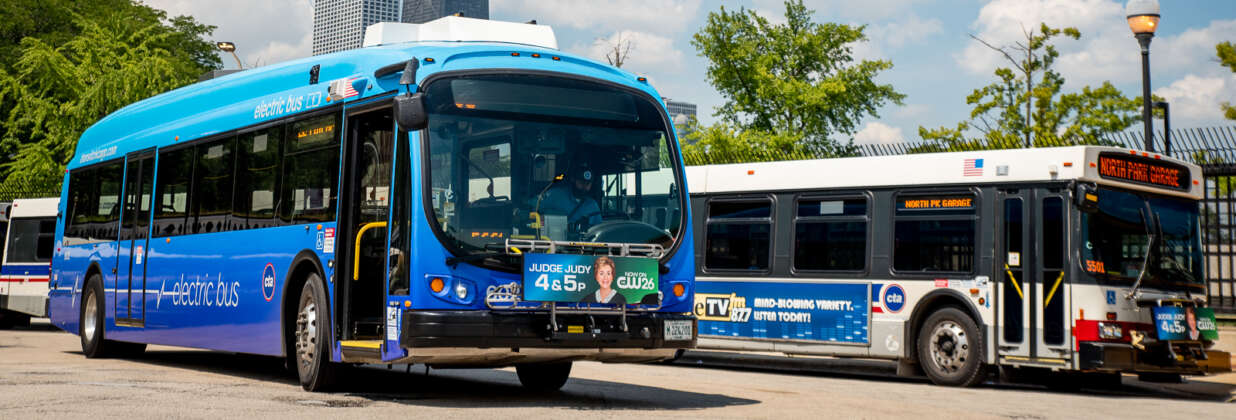
CTA’s five-year capital program has $6.757 billion programmed for capital expenditures and debt service. CTA’s capital program funding is dedicated to expansions & upgrades with most being allocated to the Red Line Extension (RLE) project. CTA is also funding state of good repair projects including rolling stock purchases, a portion of which will be electric fleet that will be supported by garage electrification projects also included in the program. Both electrification projects continue CTA’s transition to zero emissions. CTA is also prioritizing the All Stations Accessibility Program (ASAP), which aims to make all stations ADA compliant.
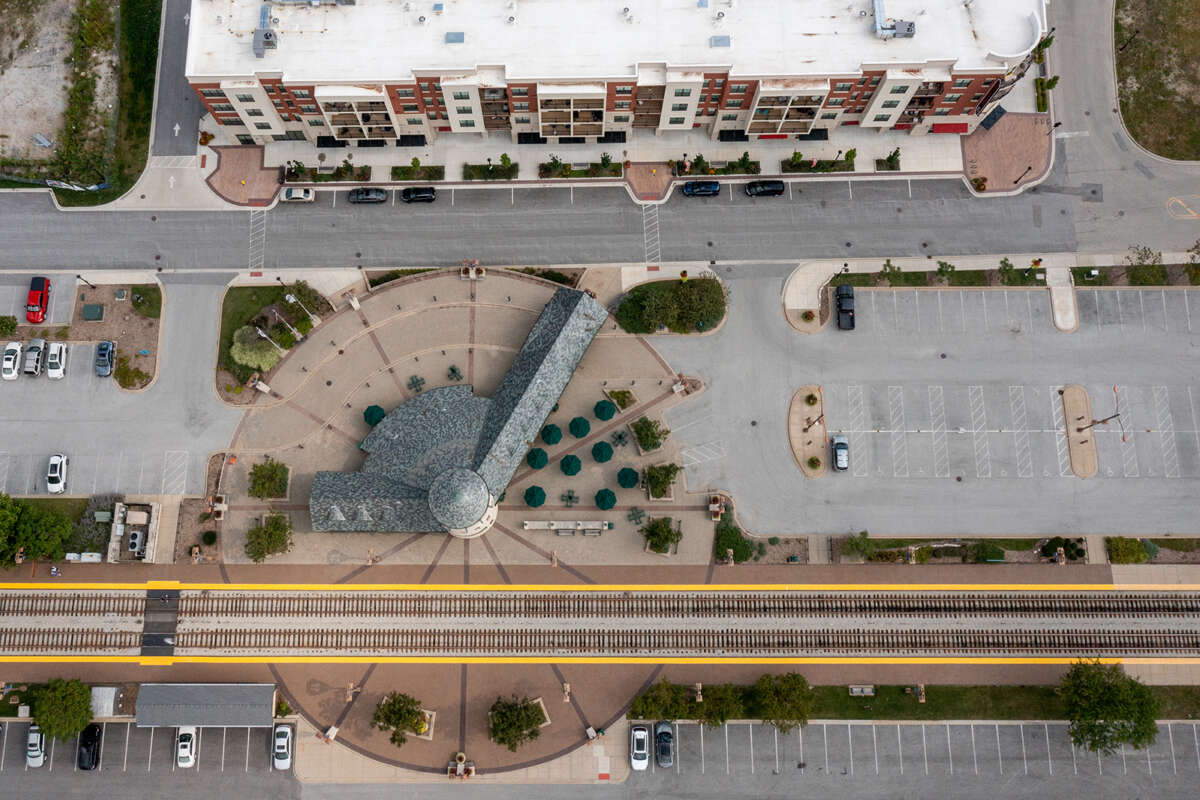
Metra’s five-year capital program has $2.122 billion available. A significant portion of Metra’s program supports the goal of bringing the system into a state of good repair. Key funded projects include track and structure improvements, and rehabilitating and replacing rail cars and locomotives. Metra’s program is advancing the transition to zero emissions goal with funds programmed for converting three diesel locomotives to zero-emission battery powered locomotives and purchasing zero-emission trainsets. Metra continues to invest in ADA compliance by funding station improvements to improve accessibility.
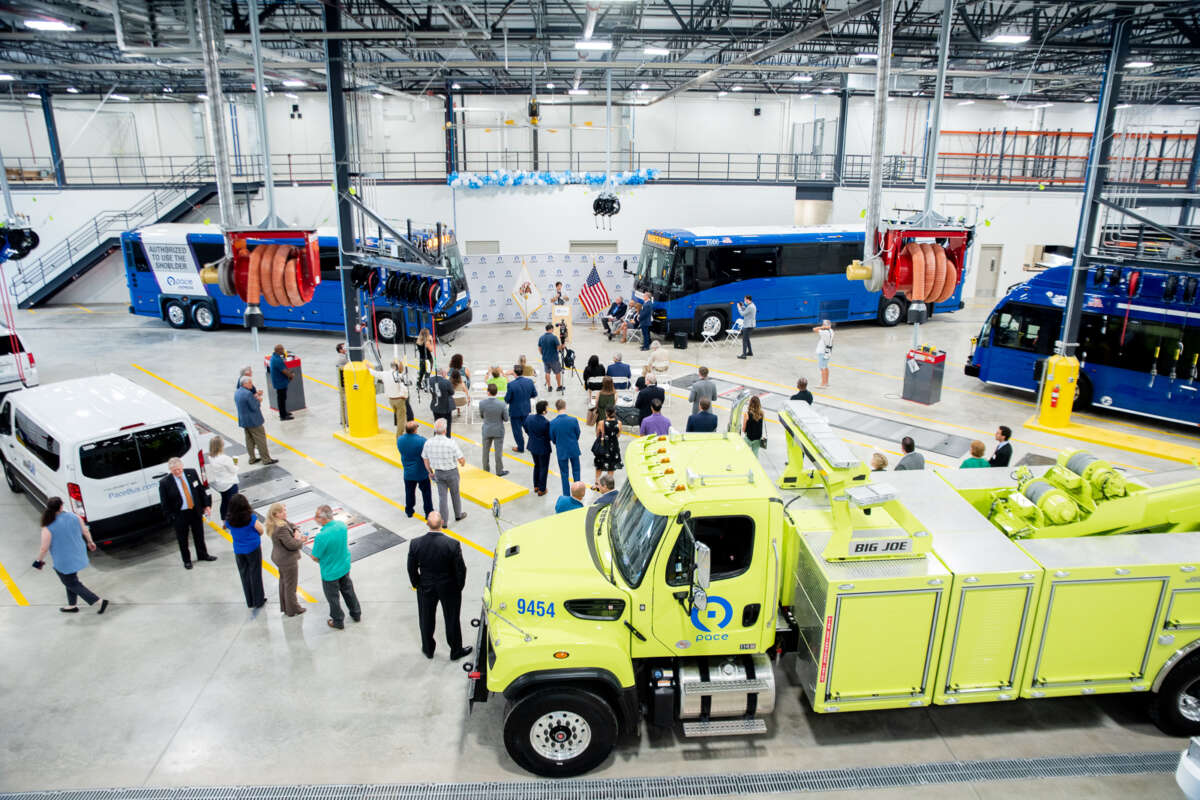
Pace’s five-year capital program is $367 million. Much of Pace’s program is allocated to vehicle and bus replacements supporting the state of good repair regional goal, some of the bus purchases are slated to be electric, which helps advance the transition to zero emissions regional goal.
Federal formula and PAYGO funding are allocated using the performance‐based capital allocation process is used to allocate federal formula and PAYGO funding. Funds are distributed based on three principles:
Addressing capital reinvestment need
Incentivizing faster completion of projects
Advancing regional policy priorities
The 2026-2030 Capital Program has been evaluated using 15 metrics that were identified in Transit is the Answer. The evaluation metrics for each project can be found in the 2026 Adopted Regional Transit Budget Capital Program Appendix. The evaluations for all projects in the 2026-2030 Capital Program are also available on the NITA Data Capital Program portal with search functionality and a downloadable dataset.
2027-2031 Capital Program
2027-2031 FEDERAL FORMULA FUNDING ESTIMATES* In accordance with public participation requirements for 49 USC §5307 (A)(1) federally funded program of projects, below are the preliminary federal formula funding appropriation estimates* per Service Board for calendar years 2027-2031.
2027
2028
2029
2030
2031
Total
CTA
5307/5340
$202,079,500
$204,100,296
$206,141,298
$204,342,826
$206,386,254
$1,023,050,174
5337
$244,698,851
$247,145,839
$249,617,298
$247,890,464
$250,369,369
$1,239,721,821
5339
$14,077,260
$14,218,033
$14,360,213
$14,633,274
$14,779,606
$72,068,386
Total
$460,855,611
$465,464,168
$470,118,809
$466,866,564
$471,535,229
$2,334,840,381
Metra
5307/5340
$91,106,242
$92,017,304
$92,937,477
$103,164,683
$104,196,330
$483,422,036
5337
$165,181,971
$166,833,791
$168,502,129
$174,410,156
$176,154,258
$851,082,305
Total
$256,288,213
$258,851,095
$261,439,606
$277,574,839
$280,350,588
$1,334,504,341
Pace
5307/5340
$53,134,444
$53,665,788
$54,202,446
$49,306,525
$49,799,591
$260,108,794
5339
$1,674,180
$1,690,921
$1,707,831
$1,595,451
$1,611,405
$8,279,788
Total
$54,808,624
$55,356,709
$55,910,277
$50,901,976
$51,410,996
$268,388,582
System
$771,952,448
$779,671,972
$779,671,972
$795,343,379
$803,296,813
$3,937,733,304
*Funding estimates may be equal or less than what is stated above
2027-2031 PRELIMINARY CAPITAL FUNDING ESTIMATES
2027
2028
2029
2030
2031
Total
NITA
State
$180,000,000
$180,000,000
$180,000,000
$194,545,451
$196,235,602
$930,781,053
NITA Total
$180,000,000
$180,000,000
$180,000,000
$194,545,451
$196,235,602
$930,781,053
CTA
Federal
$687,803,426
$654,304,168
$608,958,809
$605,684,912
$478,375,229
$3,035,126,544
State
$179,100,000
$183,577,500
$188,166,938
$189,640,439
$194,381,450
$934,866,327
NITA
$19,329,000
-
-
-
-
$19,329,000
Local
$602,409,250
$789,375,000
$470,744,409
$189,073,694
-
$2,051,602,353
CTA Total
$1,488,641,676
$1,627,256,668
$1,267,870,156
$984,399,045
$672,756,679
$6,040,924,224
Metra
Federal
$297,264,076
$305,596,095
$311,839,606
$331,174,839
$280,350,588
$1,526,225,204
State
$99,600,000
$102,090,000
$104,642,250
$102,690,445
$105,393,191
$514,415,886
Local
-
-
-
-
-
-
Metra Total
$396,864,076
$407,686,095
$416,481,856
$433,865,284
$385,743,779
$2,040,641,090
Pace
Federal
$54,808,624
$55,356,709
$55,910,277
$50,901,976
$51,410,996
$268,388,582
State
$21,300,000
$21,832,500
$22,378,313
$16,190,852
$15,133,624
$96,835,289
Local
-
-
-
-
-
-
Pace Total
$76,108,624
$77,189,209
$78,288,590
$67,092,828
$66,544,620
$365,223,871
System Total
$2,151,614,376
$2,292,131,972
$1,942,640,602
$1,679,902,608
$1,321,280,680
$9,377,570,238
Asset Management and Project Oversight
Project Management Oversight (PMO)
NITA is responsible for ensuring that the Service Boards are spending capital funds and managing their capital projects effectively and efficiently. NITA conducts periodic project reviews with Service Board project managers to ensure that capital projects are being implemented according to scope, on schedule, within budget and according to established project management guidelines.
NITA, as part of its financial oversight function, has historically maintained an interest in ensuring that the Service Boards have sufficient funding to operate and maintain their physical assets. For many years, NITA, previously known as the RTA has facilitated regional funding campaigns, overseen the issuing of bonds to provide funding for capital investments, and monitored the delivery of major projects of each of the Service Boards in order to achieve this objective. These efforts have been challenged for decades, as the lack of consistent, reliable capital funding has led to aging assets, unreliable service, and an enormous backlog of unmet capital funding needs.
Under current FTA rules, the Service Boards are now required to maintain Transit Asset Management programs, plans, and datasets for submission to the National Transit Database (NTD).
NITA still maintains an interest in regional capital funding activities and has transitioned its TAM activities into a strategic asset management (SAM) framework to monitor the state of good repair of all of the regional transit assets of the system as a combined portfolio. The SAM function provides NITA with the tools to track mid- and long-term regional investment needs and to inform capital programming and planning processes for strategic investments, as referenced in the Framework For Transit Capital Investmentand thePotential Impacts of State Funding on Transit State of Good Repairreport..