RTA and partners working on Chicago region’s first Mobility Hub Network Framework
May 14, 2024
May 14, 2024

The RTA is partnering with the Shared Use Mobility Center (SUMC) and the Cook County Department of Transportation and Highways (DoTH) to develop the Chicago region’s first Mobility Hub Network Framework. The project kicked off in early May 2024, and the outcomes of the study will include a mobility hub framework and policy report for the entire six-county RTA service area, and to develop proposed Cook County mobility hub projects.
Mobility hubs are locations where people can access multiple types of transportation modes in a central location. Features may include adjacency to transit facilities like bus stops or rail stations; micromobility options like bike or scooter share, loading zones for ride hail vehicles like Uber, Lyft, and taxis; secured parking for car sharing, vanpool, and other types of shared vehicles; electric vehicle charging stations; and delivery lockers and mini-logistics hubs.
When existing community facilities and public services—for example, health clinics, daycares, senior centers, public libraries, etc.—are part of the mix, they can also create opportunities for bridging economic and digital divides in accessing services, serving a wider share of the public as well addressing issues of climate resiliency, equity, access, and affordability.
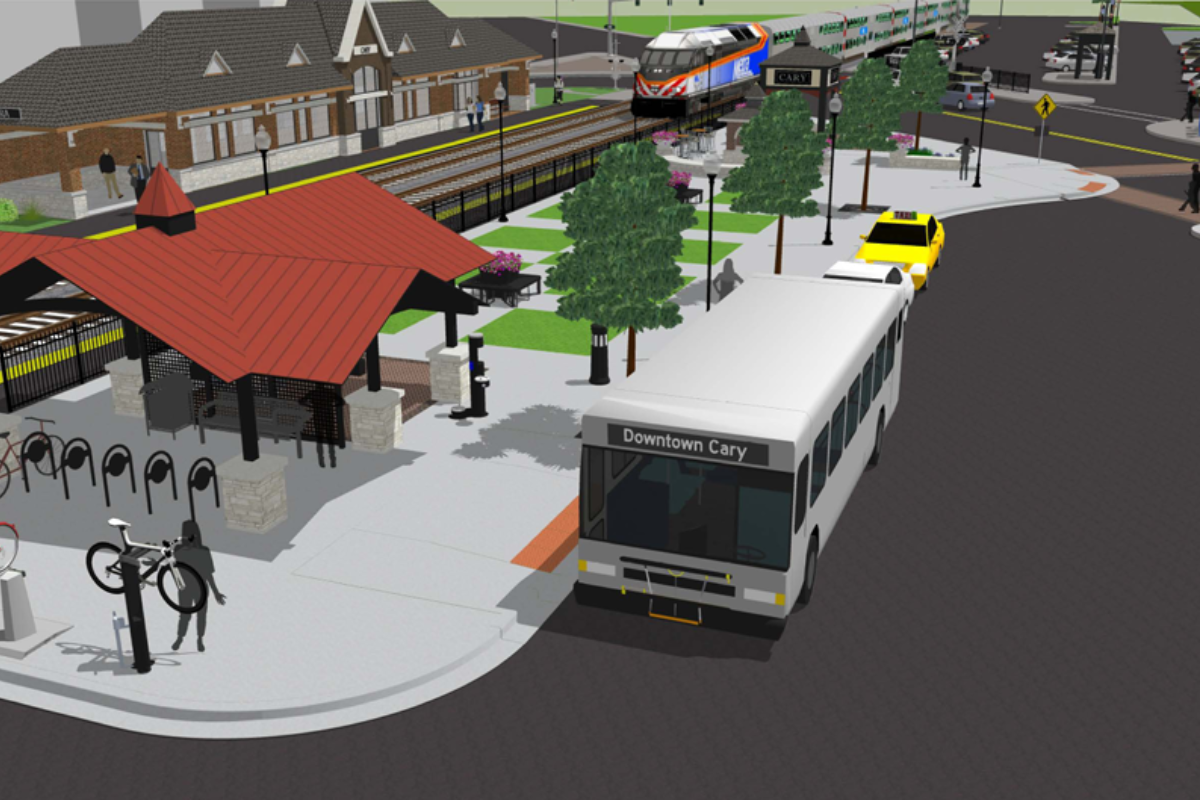
Cary Depot Plaza. Image: Village of Cary
The Mobility Hub Network Framework comes out of recent plans from Cook County and the RTA. Cook County’s Transit Plan recommends better access to transit which includes “…walking, riding bikes or scooters, taking paratransit or utilizing rideshare,” as well as “improving the quality of access and providing a variety of mobility options to extend the reach of transit.” The RTA’s Transit is the Answer strategic plan commits the agency to supporting planning and construction of mobility hubs in partnership with local communities. The Mobility Hub Network Framework is intended to serve as a guide for how Cook County, the collar counties, and other regional entities can develop and invest in new community assets that address climate change, equity, access, and affordability.
The framework itself will assist agencies and communities throughout the six-county area in determining where to locate mobility hubs and will provide a structure for approaching site and design choices in collaboration with local community members, businesses, and other key stakeholders centering equity and access to opportunity. Anchored by a synthesis of existing efforts across the region, the framework will develop a decision structure, core principles, and guidance for the creation of a network of mobility hubs prioritized according to the goals set out in the region’s key policy documents. Building on related initiatives already underway (which may not explicitly use the term mobility hub), the framework will leverage the region’s existing transportation assets and plans, demand-management approaches, and expertise, and be guided by community needs, particularly those of historically underserved populations. The business and logistical needs of public and private mobility operators and related services will also help inform discussion and planning.
Development of the framework will include meetings with SUMC, Cook County DoTH, RTA, and other stakeholders. Research around best practices from elsewhere in the U.S. and internationally will inform the final framework, as well as an inventory of existing transportation and community assets that can help inform potential locations for mobility hubs. This will include a proposed prioritization approach based on community needs, focus on underserved areas, level of potential climate impact, and the business and logistical constraints of mobility providers.
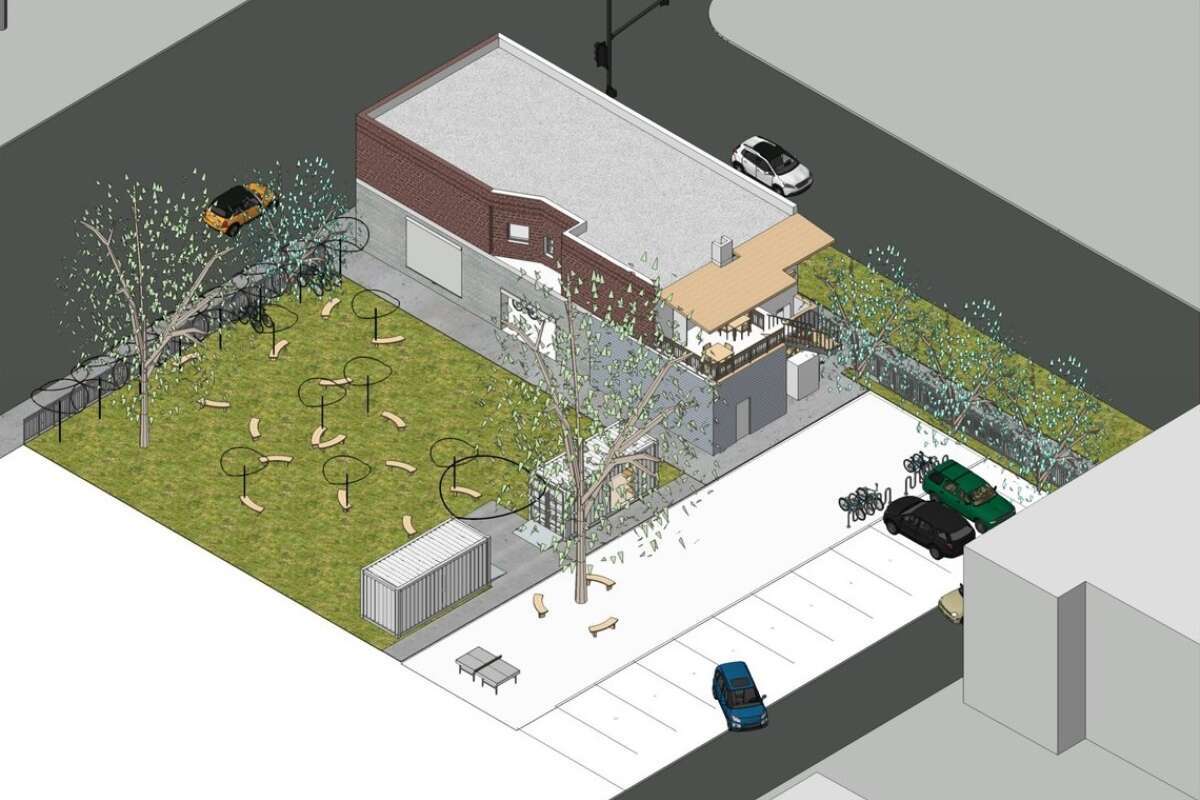
Equiticity Go Hub. Image: Equiticity
While the framework report will provide a strategy for agencies and other entities across the region, the final task of the project will focus on developing a more detailed pathway to implementation of Mobility Hubs in Cook County. Starting from the locations uncovered and prioritized in the regional framework, the team will identify 6-8 locations for the piloting of mobility hubs in Cook County, representing a variety of urban and suburban contexts and mobility access levels. For these locations the team will develop pilot implementation plans and conceptual site designs.
Based on the data and best-practice/design information compiled throughout the development of the framework, the team will create a business plan toolkit for hub implementation, including cost estimates for a variety of typical amenities, pricing and revenue strategies, and identification of possible funding sources. Where possible, it will also identify the mix of responsible entities as well as procurement and operational considerations for implementation in varied circumstances (e.g., at locations controlled by a transit agency versus municipal or private control).
The framework report is slated to be complete in spring 2025, with the Cook County Pilot Projects Report to be complete by fall 2025.
Subscribe to our Newsletter
Related Articles
 Northern Illinois Transit Authority Begins New Era for Regional Transit
New regional transit authority unifies CTA, Metra and Pace around shared vision for safer, more reliable and better-connected transitThe Northern Illinois Tr...
September 1, 2026 Study lays groundwork for more coordinated regional transit service under NITA
A new regional transit service coordination study will help bridge between current service planning practices and the first Northern Illinois Transit Authori...
August 3, 2026 RTA announces largest Access to Transit program, bringing $11 million of bicycle and pedestrian improvements to stations throughout region
The RTA has selected 21 new projects at a total cost of $10.9 million for its Access to Transit program, making it the largest round of funding in agency his...
June 24, 2026 Recently completed Community Planning projects to improve mobility in Bronzeville, Sauk Village
This spring, two projects wrapped up that will make communities throughout the Chicago region more equitable, accessible, and transit-friendly, thanks to sup...
June 11, 2026 How the NITA trailer bill and 2027 state budget will impact Chicagoland transit
On May 31, 2026, the eve of the Northern Illinois Transit Authority (NITA) Act (Public Act 104-457) taking effect, the Illinois General Assembly passed trail...
June 11, 2026 RTA adopts Human Services Transportation Plan (HSTP) to improve transportation access for all
At their May meeting, the RTA Board of Directors adopted the 2026 Human Services Transportation Plan (HSTP), a federally required document that identifies tr...
June 1, 2026