What moves you? Thousands weigh in on their regional transit priorities via online survey, at Union Station event
November 2, 2026
November 2, 2026

NITA is committed to building the future of transit with rider voices at the center. For the first time, the regional transit agency published a prioritization survey, “What Moves You?” in advance of budget development to hear from riders about what they want to see in 2027 and beyond. The survey was available online in Spanish and English from September 28 to October 16, 2026. It was shared by CTA, Metra, Pace, advocacy groups including the Active Transportation Alliance, Metropolitan Planning Council, and Elevated Chicago, as well as the Mayor’s Office for People with Disabilities, Illinois Department of Transportation, and several Chicago news outlets.
The survey received 4,368 responses. Respondents brought a range of travel experiences and needs. More than one-third (37%) reported having no working vehicle in their household, and about four in five rode transit at least weekly, including 40% who rode five or more days a week. Thirteen percent said they or someone they often traveled with used a mobility device or needed step-free access. Respondents reported approximately 30 languages spoken at home, with 8% reporting multiple languages. Participation included residents of all six counties, although responses were concentrated in Cook County. These perspectives help explain the importance respondents placed on dependable service, accessibility, clear information, and connections across the transit system. The results are not scientific but were used as one input in budget decision-making.
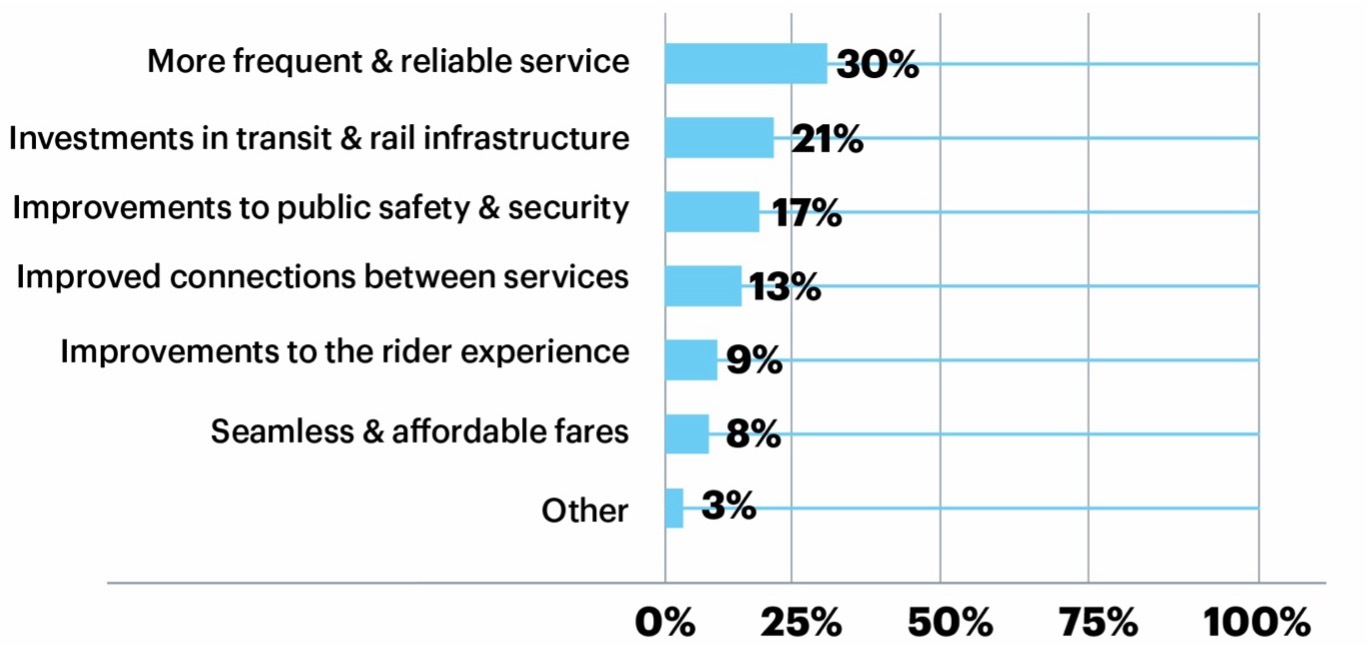
Respondents ranked more frequent and reliable service as the most important thing they want NITA to achieve, followed by investments in transit and rail infrastructure and improvements to public safety and security. These priorities reflect an emphasis on the foundations of transit: service riders can count on, infrastructure that supports dependable trips and a system where people feel safe. Improved connections between services, improvements to the rider experience, and seamless and affordable fares rounded out the priorities. Additional questions explored which specific investments respondents would prioritize within each area.
Note: Ranking charts show weighted results that account for both how many respondents selected an option and where they ranked it. Percentages in those charts represent each option’s share of the total weighted score, not the percentage of respondents who selected it.
The survey asked respondents to rank what they most wanted NITA to achieve for the region’s transit system.
Figure 1. Survey Respondents’ Ranked Top Priorities for NITA
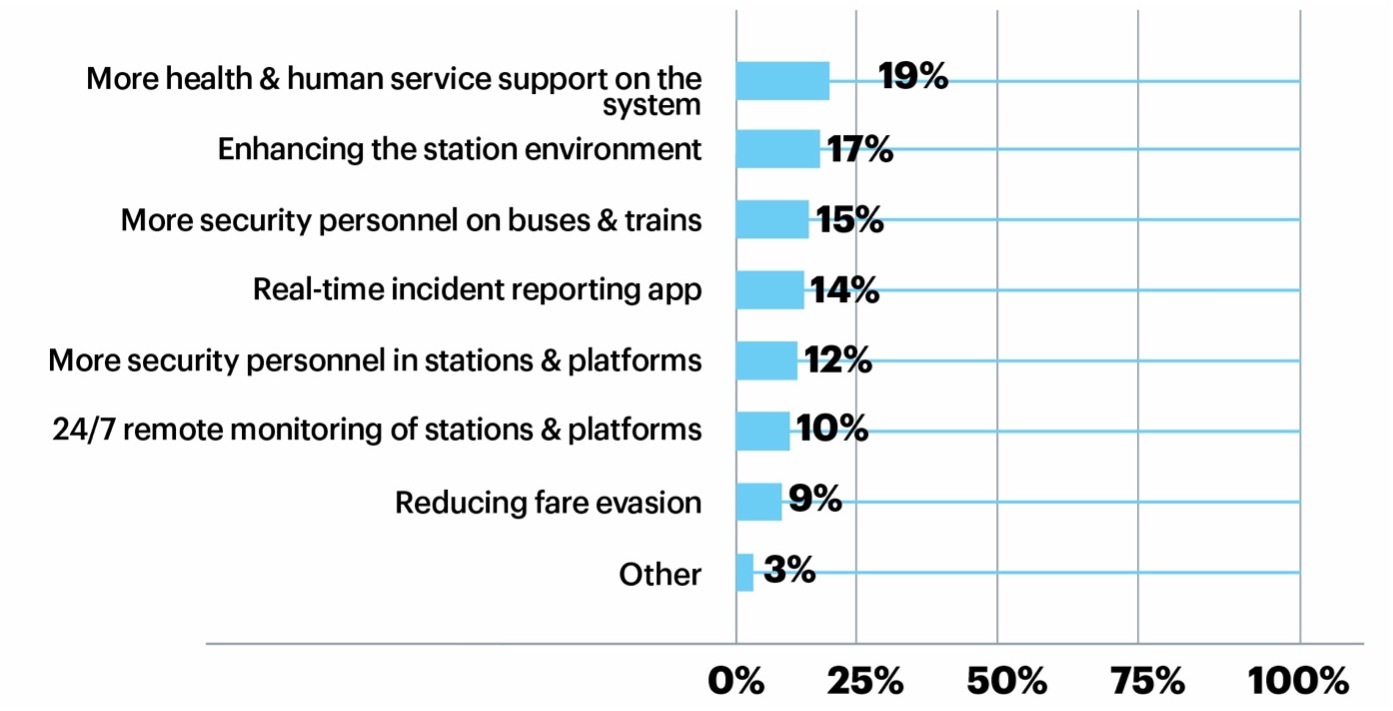
Respondents were next asked to rank the investments they would prioritize to improve safety and security on transit.
For security improvements, more mental health and human service support on the system ranked highest, followed by enhancing the station environment. Respondents also prioritized more security personnel on buses and trains, a real-time incident reporting app, and more security personnel at stations and platforms. Together, these results point to interest in a combination of supportive services, improvements to the physical environment, a visible security presence, and ways for riders to report problems. Remote monitoring of stations and platforms and reducing fare evasion ranked below these other approaches.
Figure 2. Survey Respondents’ Ranked Priorities for Security Improvements
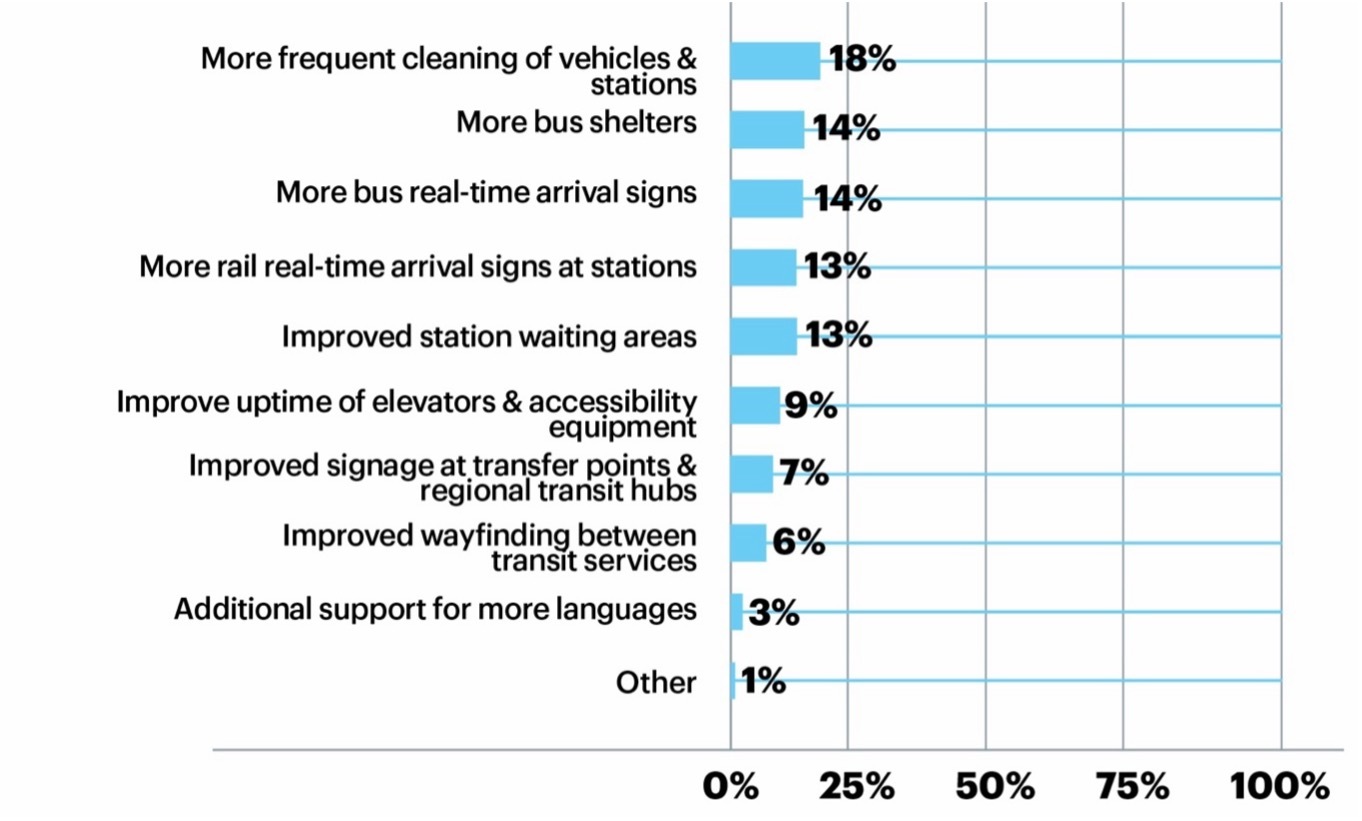
The survey asked respondents which improvements to vehicles, stops, stations, and customer information would most improve their transit experience.
More frequent cleaning of vehicles and stations ranked highest among improvements to the rider experience. More bus shelters ranked second, followed by real-time bus arrival signs, real-time rail arrival signs and improved station waiting areas. These priorities emphasize the conditions riders encounter throughout a trip, including cleanliness, protection from the weather, and access to information while waiting. Respondents also identified the importance of elevator and accessibility equipment uptime, signage at transfer points and regional transit hubs, wayfinding between services, and support for additional languages.
Figure 3. Survey Respondents’ Ranked Priorities for Rider Experience Improvements
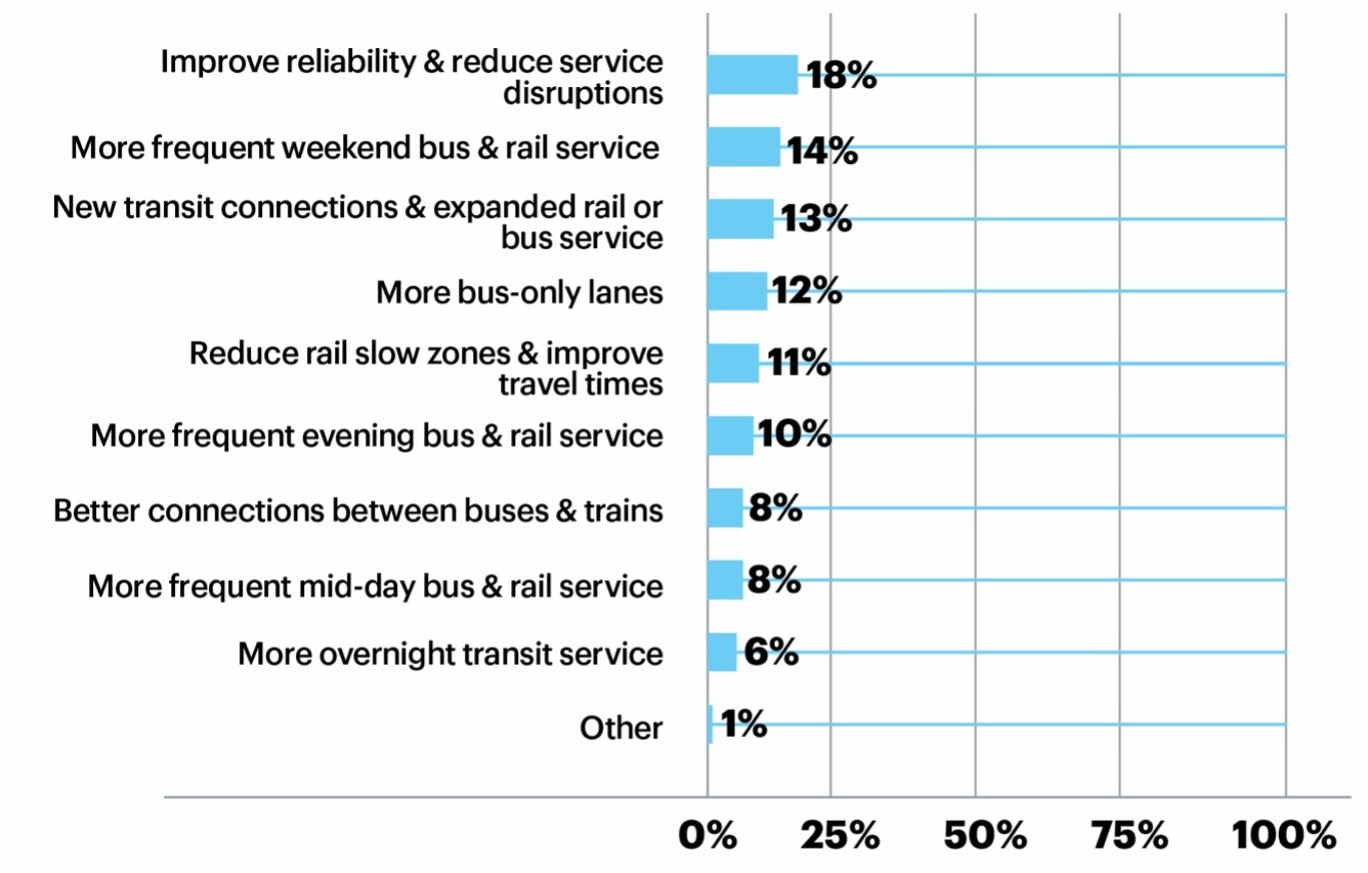
Respondents were then asked to rank the service improvements they would most like to see across the transit system.
Improving reliability and reducing service disruptions ranked highest among service improvements, followed by more frequent weekend bus and rail service. New transit connections and expanded service ranked third, while more bus-only lanes and reducing rail slow zones and travel times rounded out the top five.
The results highlight both the importance of making existing trips more dependable and interest in service that reaches more destinations and better supports travel beyond the traditional weekday commute. More frequent evening service, better connections between buses and trains, more frequent midday service and expanded overnight service were also included among the options.
Figure 4. Survey Respondents’ Ranked Priorities for Service Improvements
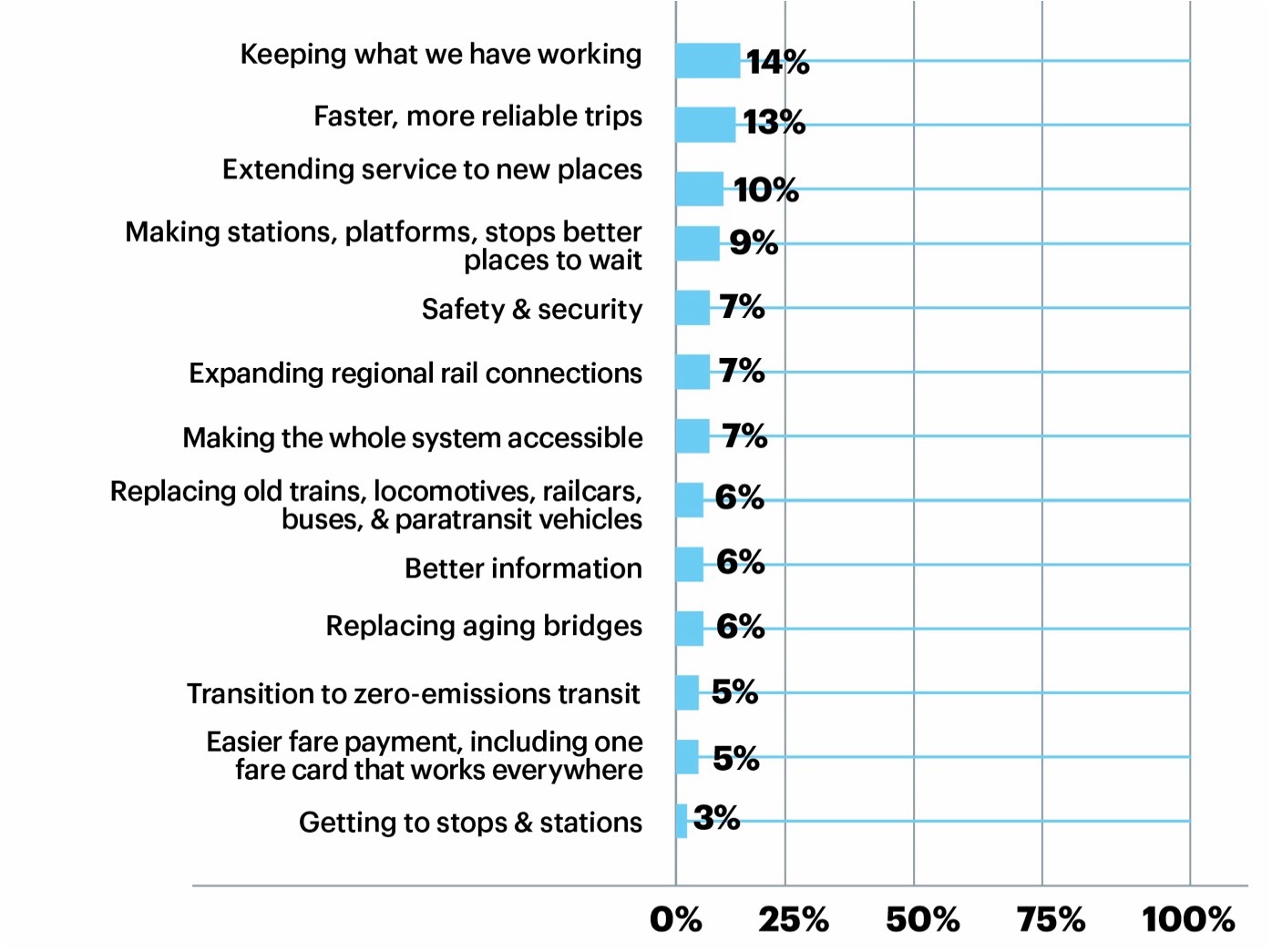
The survey asked respondents to rank their priorities for capital investments in the region’s transit infrastructure.
Capital priorities similarly emphasized maintaining the existing system and improving its performance. Keeping tracks, bridges, signals, garages and stations working ranked first, followed by investments that make trips faster and more reliable, such as modernizing rail infrastructure, addressing slow zones, and giving buses priority at traffic lights. Extending service to new places ranked third, followed by making stations, platforms and stops better places to wait through improvements such as shelters, lighting, and seating. These results show how respondents connected capital spending to everyday travel needs, from dependable infrastructure to access to more destinations and more comfortable waiting areas. Other priorities included safety and security investments, expanded regional rail connections, system accessibility, and replacement of aging vehicles.
Figure 5. Survey Respondents’ Ranked Priorities for Capital Investments
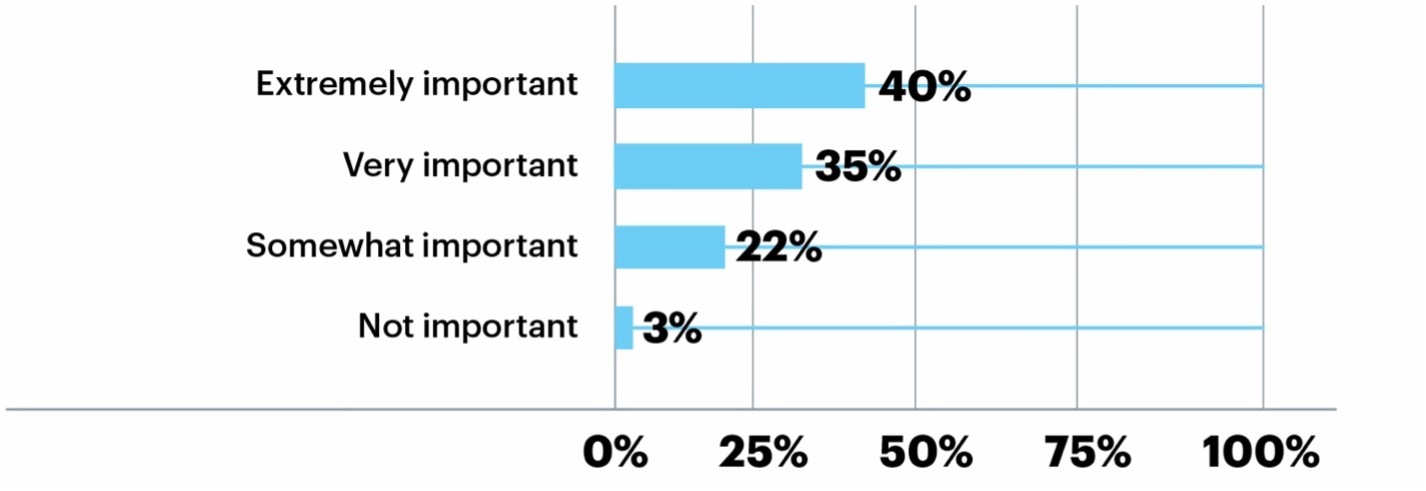
Respondents were asked how important it was to improve connections between transit services.
Improving connections between transit services was extremely important to 40% of respondents and very important to another 35%. An additional 22% considered it somewhat important, while 3% said it was not important. The responses indicate broad interest among survey participants in making the region’s transit services work better together. For riders whose trips involve more than one bus, train, or transit provider, connections are an important part of the overall journey.
Figure 6. Importance of Improving Connections Between Transit Services
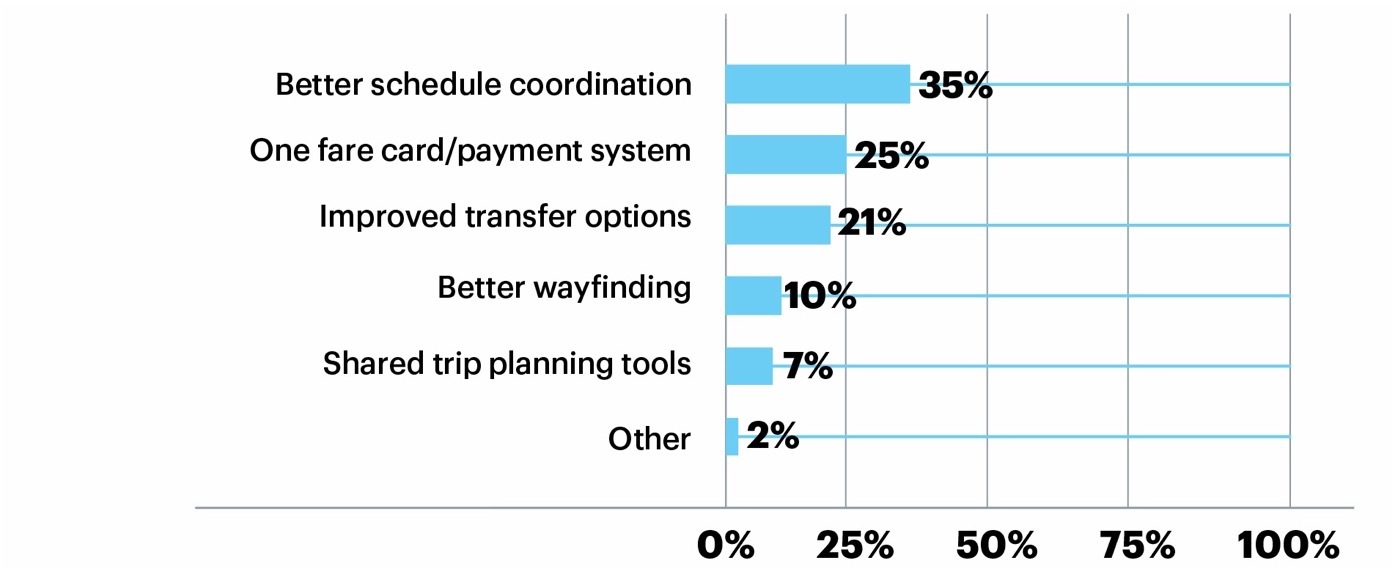
Respondents were then asked to rank the improvements that would make connecting between transit services easier. Better schedule coordination ranked first, followed by one fare card or payment system and improved transfer options. Better wayfinding and shared trip planning tools followed. The emphasis on schedule coordination highlights the importance of how services operate together, alongside the ease of paying for and making a transfer. These results provide direction for regional coordination efforts that address the full trip, including planning, payment, and connections between services.
Figure 7. Survey Respondents’ Ranked Priorities for Improving Transit Connections
Open-ended questions gave respondents an opportunity to explain their priorities and suggest improvements to specific routes, stations, and corridors. Their comments described how long waits, service disruptions, missed connections, unclear information, and cleanliness affect everyday trips. Respondents also identified needs for better shelters and station amenities, accessible facilities, and service that better supports evening and weekend travel.
Comments about the planned Transit Ambassador Program highlighted several ways ambassadors could help: providing directions and assistance, helping de-escalate conflicts, and connecting people with mental-health and social services. Capital suggestions ranged from repairing and modernizing existing infrastructure to creating new transit connections. These responses provide additional context for the ranked results and identify ideas for further evaluation through regional service planning, safety initiatives, and future capital project selection.
NITA also engaged with the public at an event, A Stronger Region Moves Together, held at Chicago Union Station on October 14. The interactive open house attracted nearly 400 people to engage with staff from NITA, CTA, Metra, and Pace on topics including fares, trip planning, transit-oriented development, public safety, service planning, hiring, and more. Public safety partners from the Chicago Police Department, Metra Police, Cook County Sheriff’s Office, and the Illinois Office to End and Prevent Homelessness were also available to talk about NITA’s future holistic approach to safety.
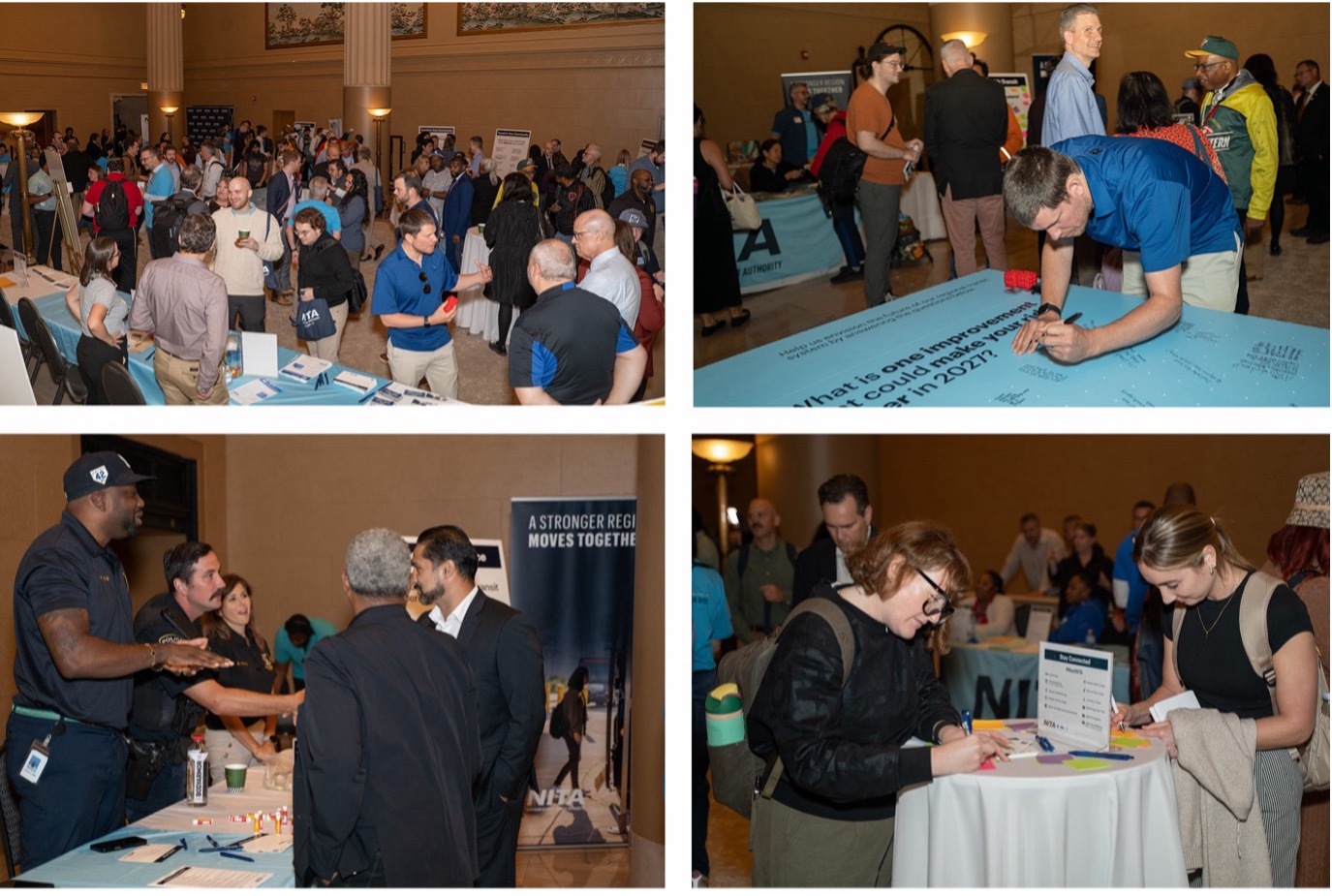
Engagement will continue to be a priority for NITA, and public events will continue across the region in 2027. View upcoming engagement opportunities.
Subscribe to our Newsletter
Related Articles
 NITA Community Planning projects across the region kick off to grow transit-friendly communities
NITA is collaborating with municipal governments to grow transit-friendly communities through the Community Planning program. This program provides funding a...
November 10, 2026 What moves you? Thousands weigh in on their regional transit priorities via online survey, at Union Station event
NITA is committed to building the future of transit with rider voices at the center. For the first time, the regional transit agency published a prioritizati...
November 2, 2026 NITA launches Rider Advisory Councils, now accepting applications
As NITA builds a unified, rider-focused transit system for the Chicago region, we are inviting riders to help shape that work directly. NITA is now accepting...
September 25, 2026 Ad Hoc Committee on the Transition to NITA issues final report
Between the June 1 effective date of the Northern Illinois Transit Authority (NITA) Act and the September seating and first meeting of the new NITA Board of ...
September 18, 2026 Meet NITA’s first Board Chair and Interim Executive Director
At its first meeting on September 10, the NITA Board of Directors selected two leaders who will help guide the new regional transit agency through its next p...
September 10, 2026 Northern Illinois Transit Authority Begins New Era for Regional Transit
New regional transit authority unifies CTA, Metra and Pace around shared vision for safer, more reliable and better-connected transitThe Northern Illinois Tr...
September 1, 2026