What Illinois can learn from transit funding packages in peer states
August 24, 2023
August 24, 2023
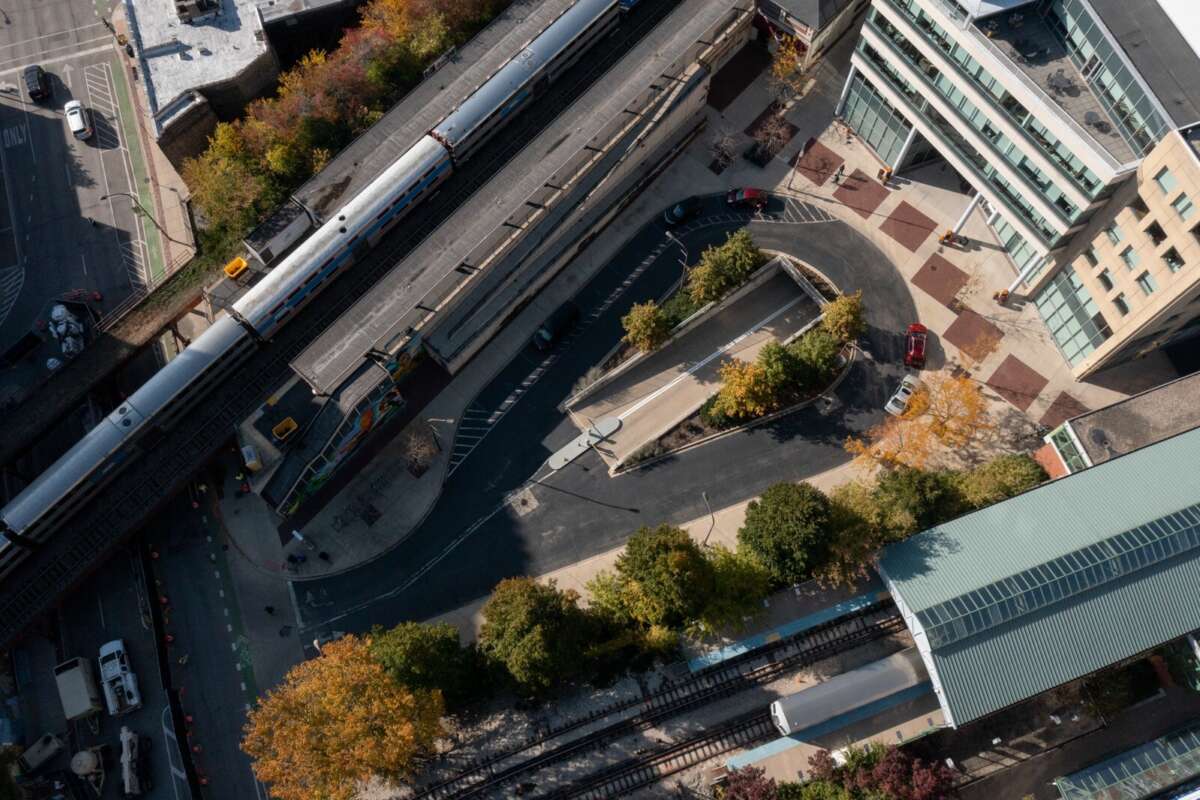
Public transit plays an essential role in the lives of millions of riders across the Chicago region and has the potential to reach even more people — but the system has been drastically underfunded for decades. This lack of funding has been exacerbated in recent years because of pandemic-induced drops in ridership and fare revenue.
While significant ridership recovery has occurred, permanent changes in remote and hybrid work are projected to result in lower levels of ridership for the remainder of the decade compared to 2019. Beginning in 2026, the RTA system is facing a projected $730 million annual budget gap. At nearly 20% of the annual operating budget, this gap, if unaddressed, would drastically impact current service and fares, and prohibit any additional improvements to the regional system.
The RTA system is not alone in facing many of its current challenges. Large transit systems across the US are facing proportionally similar funding gaps as they draw down remaining federal COVID relief funds, many facing shorter timelines than our region. Every major transit agency across the country has been able to continue operations because of this relief funding, and all are working to find solutions to fill their budget gaps before they hit their own fiscal cliffs when that funding is depleted. Three states have already taken action to provide new revenues for transit. Action taken at the state level to support peer agencies will provide valuable insights into how the RTA can continue to advocate for additional public funding as the fiscal cliff approaches.
Big city agencies like Chicago’s are facing these significant operating deficits because their budgets are heavily reliant on fares. While small and midsize agencies already secure 80% or more of their operating funding from federal, state, and local governments, regions like Chicago have traditionally been expected to raise as much as 50% of our operating revenue from fares.
Transit is the Answer calls for the RTA to work with regional partners and stakeholders to secure increased funding for transit operations and develop a funding structure that is less reliant on fares. This would allow us to not only avoid severe fare hikes and service cuts, but ultimately improve service, grow ridership, and create a more equitable system.
Three states have taken action to support their transit systems through recent budget packages. Highlights of each package provide an early look at what others are doing to help inform how the RTA should pursue solutions for our region.
Spurred by advocacy from the California Transit Association, California’s legislature passed a package that provides $5.1 billion to the states’ 300+ transit agencies over the next 4 years. This is forecasted to cover operations for 1-2 years before more funding will need to be sought.
More details:
Governor Hochul championed new funding for transit in her budget proposals early on, and the final budget includes nearly $4.5 billion in one-time and ongoing revenues to the Metropolitan Transit Authority projected to fill their budget gap until at least 2027.
More details:
Minnesota had not passed a state capital bill since 2008, so there was significant momentum behind taking bold action in support of transportation this session. The final package pairs an $8.8 billion state capital bill with dedicated, ongoing revenue for Metro Transit operations.
More details:
While this is only a small subset of the agencies that will ultimately have to take action to address their fiscal cliffs, a few basic takeaways can be gathered from their examples:
The RTA will continue to monitor legislation affecting peer systems as it advances to help inform our own strategies moving forward, but we know that we cannot do this alone. Join our coalition to take future action and advocate with us for solutions.
Subscribe to our Newsletter
Related Articles
 Northern Illinois Transit Authority Begins New Era for Regional Transit
New regional transit authority unifies CTA, Metra and Pace around shared vision for safer, more reliable and better-connected transitThe Northern Illinois Tr...
September 1, 2026 Study lays groundwork for more coordinated regional transit service under NITA
A new regional transit service coordination study will help bridge between current service planning practices and the first Northern Illinois Transit Authori...
August 3, 2026 RTA announces largest Access to Transit program, bringing $11 million of bicycle and pedestrian improvements to stations throughout region
The RTA has selected 21 new projects at a total cost of $10.9 million for its Access to Transit program, making it the largest round of funding in agency his...
June 24, 2026 Recently completed Community Planning projects to improve mobility in Bronzeville, Sauk Village
This spring, two projects wrapped up that will make communities throughout the Chicago region more equitable, accessible, and transit-friendly, thanks to sup...
June 11, 2026 How the NITA trailer bill and 2027 state budget will impact Chicagoland transit
On May 31, 2026, the eve of the Northern Illinois Transit Authority (NITA) Act (Public Act 104-457) taking effect, the Illinois General Assembly passed trail...
June 11, 2026 RTA adopts Human Services Transportation Plan (HSTP) to improve transportation access for all
At their May meeting, the RTA Board of Directors adopted the 2026 Human Services Transportation Plan (HSTP), a federally required document that identifies tr...
June 1, 2026