Fare Recovery Ratio: What it is and why it must be reformed
January 5, 2023
January 5, 2023
After more than a year of engagement, the RTA has released a draft regional transit strategic plan, Transit is the Answer, which the RTA Board of Directors will consider for adoption during their February 16 meeting. The plan illustrates how transit is the answer to some of the most urgent challenges facing our region. Chicagoland’s public transit system contributes to our region’s economic, social, and environmental health in ways and at a scale nothing else can.
Stakeholders and the public have been clear that transit is a valuable asset that needs to be preserved, improved, and expanded. However, Chicagoland transit is over reliant on fares, an issue exacerbated by the COVID-19 pandemic and its impacts on ridership.
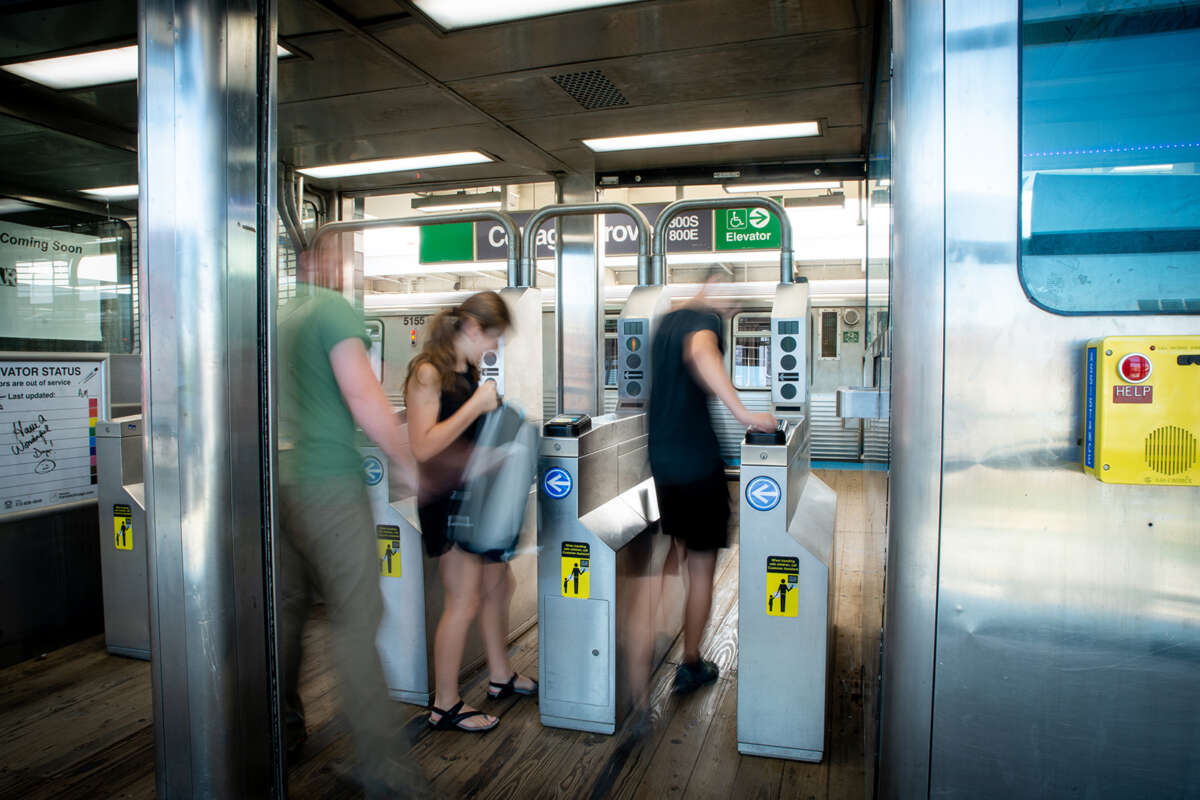
CTA, Metra, and Pace Suburban Service are required by state law to bring in enough revenue to cover 50% of the regional transit system’s day-to-day operating expenses each year (known as the system-generated revenue recovery ratio requirement). Also, Pace’s ADA Paratransit Service is required to cover 10% of its operating costs through direct revenue. The CTA, Metra, and Pace primarily generate revenue from rider fares, along with ancillary revenue such as advertising income and lease of space.
These laws were enacted decades ago, with the thinking that it would ensure that transit riders pay a “fair share” of the cost of their trip. As of 2022, the RTA’s 50% recovery ratio requirement is unique among U.S. transit agencies, and the impacts of the COVID-19 pandemic on ridership have further demonstrated how unrealistic and overly burdensome the recovery ratio is.
In December 2021, the Illinois General Assembly granted temporary relief from the recovery ratio requirement through the end of 2023. The RTA believes that a permanent change to the current statutory recovery ratio requirements is warranted and will enable more equitable delivery of transit service across the region. The RTA and transit operators would still be required to maintain balanced budgets, but updating the recovery ratio requirement would codify what the pandemic has dramatically illustrated and has been echoed by residents we’ve engaged with across the region—transit is an essential public service that should be provided not to generate revenue, but as a way to advance our region’s economic viability and future success.
An informal review of transit systems nationwide revealed few recovery ratio policies similar to the RTA’s requirements and none that aimed for as high a share of system-generated revenue. The two systems with formal state requirements most akin to the RTA’s, the Maryland Transit Administration and Denver’s Regional Transportation District, had their 35% recovery ratio requirements repealed in 2017 and 2021, respectively. New York and California require specific revenue targets to apply for state transit funding; however, these are significantly more lenient than the RTA’s requirement of 50% of operating funds coming from system generated revenue (primarily fares paid by riders).
One advocacy area in Transit is the Answer calls on the RTA to develop a funding structure that is less reliant on rider fares, but instead focused on expanding access to opportunity.
With more resources and a funding structure less reliant on fares, the transit operators could focus on enhancing service and providing transit coverage across the region, which broadens access to areas that have been historically underserved. This would also allow the region to innovate with different fare levels and models, such as seamless transfers or free or reduced rides for residents experiencing low incomes.
Throughout the strategic plan development process, stakeholder working groups articulated a clear need to develop an equity-based funding structure to allow the transit operators to enhance transit affordability while lowering reliance on fares to balance operating budgets. Specific discussion topics included seeking greater RTA autonomy in the distribution of capital and operating funds; studying and piloting programs to eliminate fares as barrier for access; and working with social services to better understand riders’ unmet mobility needs.
Transit is the answer to many of the most urgent challenges facing us today, and investing in transit is key to advancing equity, growing our economy, and combating climate change. We anticipate federal COVID-19 relief funding to last through 2025. After that, our transit system faces a $730 million annual budget gap that cannot be closed by raising fares or cutting service—increased public funding is essential.
Transit is the Answer identifies potential funding solutions and lays out an agenda for advocacy and action that addresses safety, reliability, speed, and other improvements to the transit system. It is our shared responsibility to build a sustainable model of investment in the operations, upkeep, and modernization of our regional public transportation assets. Join our coalition to take future action and advocate with us for these solutions.
Subscribe to our Newsletter
Related Articles
 Meet NITA’s first Board Chair and Interim Executive Director
At its first meeting on September 10, the NITA Board of Directors selected two leaders who will help guide the new regional transit agency through its next p...
September 10, 2026 Northern Illinois Transit Authority Begins New Era for Regional Transit
New regional transit authority unifies CTA, Metra and Pace around shared vision for safer, more reliable and better-connected transitThe Northern Illinois Tr...
September 1, 2026 Study lays groundwork for more coordinated regional transit service under NITA
A new regional transit service coordination study will help bridge between current service planning practices and the first Northern Illinois Transit Authori...
August 3, 2026 RTA announces largest Access to Transit program, bringing $11 million of bicycle and pedestrian improvements to stations throughout region
The RTA has selected 21 new projects at a total cost of $10.9 million for its Access to Transit program, making it the largest round of funding in agency his...
June 24, 2026 Recently completed Community Planning projects to improve mobility in Bronzeville, Sauk Village
This spring, two projects wrapped up that will make communities throughout the Chicago region more equitable, accessible, and transit-friendly, thanks to sup...
June 11, 2026 How the NITA trailer bill and 2027 state budget will impact Chicagoland transit
On May 31, 2026, the eve of the Northern Illinois Transit Authority (NITA) Act (Public Act 104-457) taking effect, the Illinois General Assembly passed trail...
June 11, 2026