Guest blogger Julia Gerasimenko envisions green, affordable multimodal transportation
September 30, 2021
September 30, 2021
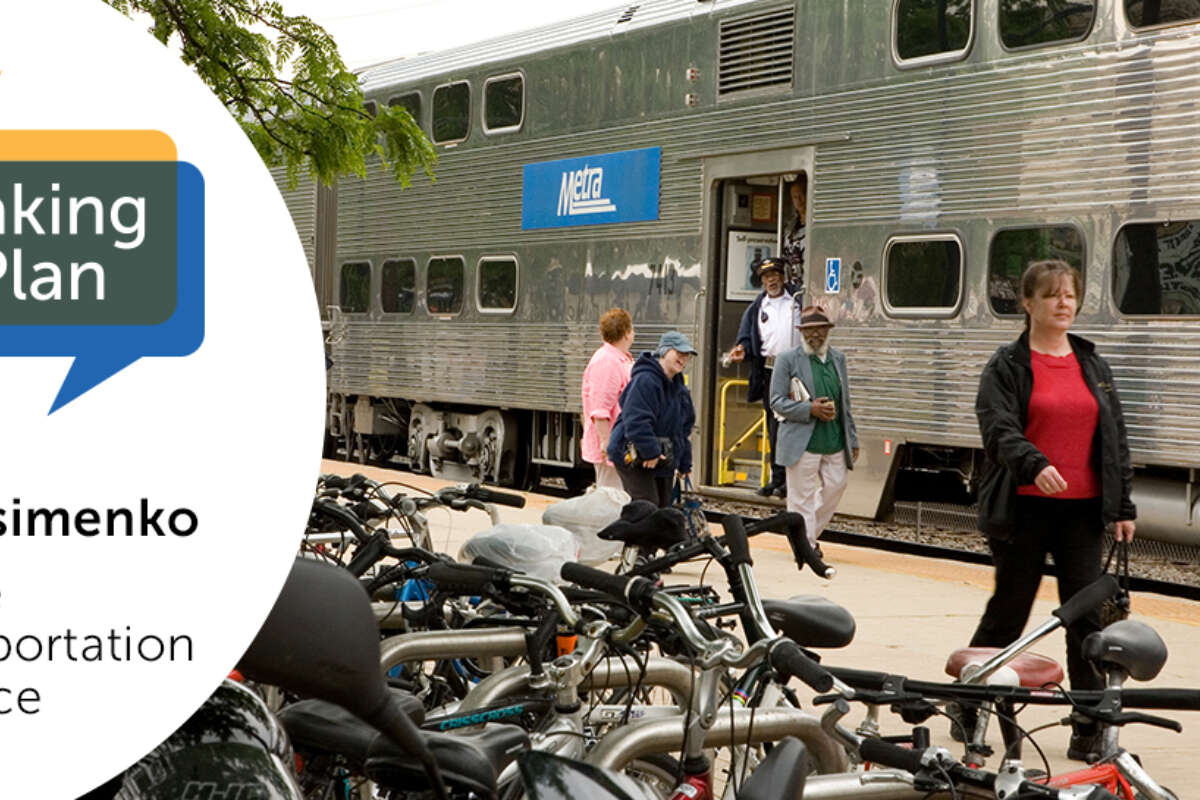
 The RTA is currently developing the 2023 Regional Transit Strategic Plan for Northeastern Illinois at a time when the challenges and opportunities facing our region’s transit system have never been greater. Making a Plan represents our effort to engage and collaborate with close stakeholders and the public. We have invited a group of transit users and thinkers to answer a set of questions for an occasional guest series on Connections, the RTA blog. The views represented in this series are not those of the RTA, but they are views we want to hear and have heard. If you have thoughts about this post, the strategic plan, or would like to participate by contributing a guest blog post, please email communications@rtachicago.org and subscribe to our newsletter to learn more.
Name: Julia Gerasimenko
Organization or Affiliation: Active Transportation Alliance (https://activetrans.org/)
Role/Responsibilities: Advocacy Manager
Favorite transit mode or station? The bus or electric Divvy bike
Why are you passionate about transit?
I have never owned a car and have always been intrigued by the freedom and flexibility that transit provides. I was inspired by growing up a Metro North ride away from New York City’s transit system and the ever-expanding transit system of my birthplace, Moscow. Beyond my personal experience, when I worked with Chicagoland high school and college students in a previous job, I witnessed how a lack of affordable, frequent transit service impacts educational access. That radicalized me to get involved in transportation advocacy.
What do you see as the greatest challenges and opportunities for the Chicago region’s transit system over the next ten years?
The next ten years pose great opportunity as well as existential threats. As we try to center transit in responding to climate change, an entrenched status quo of a car centric and fossil fuel powered region threaten to hold us back. The pandemic provided a new paradigm in which to recognize transit as essential to our lives and the economy. With the looming threat of climate change and a growing portion of emissions coming from transportation, we must fight for transformational investment in our region’s transit system. We can provide robust, affordable access to employment, healthcare, and all of life’s necessities and joys for the entire region. But this requires a new level of investment.
What is the biggest barrier to realizing these opportunities?
The biggest barrier to realizing these opportunities is building the political will needed to upend the status quo. Decades of structural racism have shaped the transportation system as we know it. Environmental justice communities continue to bear the brunt of climate change and other burdens of the transportation system. We need drastic reforms to ensure that the benefits of our region’s transportation system reach environmental justice communities first and foremost. If we can build the political will, then the policy outcomes and change we seek is possible.
Tell us your ideas for improving access to transit within the Chicago region and what policy levers or partnerships might be required to make the changes you envision?
Our vision for the future of Chicagoland transit is one where every person in the region has access to 10-minute headways of fast, reliable, affordable, electrically powered, and accessible service, no matter where they live. CTA, Pace, and Metra should become a fully integrated system that does not just serve white collar commuters to the central business district, but instead provides frequent and robust service throughout the entire region. Everyone should feel safe on transit regardless of their identity, thanks to unarmed trauma informed transit ambassadors that serve as the friendly face to the system and intervene in moments of harassment. Affordable housing development and transit-oriented development are crucial in fulfilling this vision, otherwise transit will continue to serve as shelter to those in need.
All these outcomes necessitate an unprecedented level of governmental coordination and investment. If all levels and agencies of government in the region can come together to create and commit to a shared vision based in values of equity, environmental justice, transparency, real community leadership and empowerment, then these outcomes are achievable.
Decades of underfunding have left the transit system in a constant state of austerity. Tradeoffs are almost always necessary when making decisions about improvement and expansion of the system. How do you recommend investing in the system to achieve the greatest regional impact?
First we need to shift the public narrative to highlight transit as a public good and a human right. Transit must be funded equally to highways and roads. The priority in funding should be providing frequent service, which requires changing funding structures to fund operations. Increased service - rather than just building out new capital projects or policing the system – should be the priority. With more frequent service that serves all workers no matter what shift they work, the system will become more useful. If you look at how the benefits and burdens of our region’s transportation system are distributed, the structural racism becomes evident. Investment must be distributed with a racial equity lens to rectify past harms.
What can we learn from efforts to advance equity in other public spheres and apply to transit to make a tangible difference?
Transit has a lot to learn from other sectors. For example, many other sectors already subsidize costs for people with lower incomes, from the Low-Income Home Energy Assistance Program (LIHEAP) that subsidizes utility costs for low income people, to food stamps and free and reduced lunch. Electricity, heating, and access to nutritious food are all necessities and these subsidies have proven even more crucial as the pandemic has pushed millions more into poverty in the United States. Access to transit should be considered a necessity, especially for those who cannot afford a private car or who are unable to drive. I’m also encouraged by seeing the Chicago Department of Housing utilize Racial Equity Impact Assessments (REIA) in their planning and outreach work. Transit agencies need to go beyond Title VI evaluations that fall short in truly assessing who benefits and who is burdened by investments, budgets, and service tradeoffs. REIAs should be implemented not as an afterthought but as a standard practice.
Regional mobility impacts everyone but is competing for attention among many worthy public policy issues. What in your experience has been the most successful way to engage people about transit issues?
While it’s true that many issues are competing for the attention of residents and policy makers, I find that when you engage people where they are at and work to build trust over time, people have a lot to share about their transit experience and how it could be improved. Many communities are also suffering from overplanning where the same groups are called upon again and again with little results and follow through from those in power. When a person’s lived experience is not valued and they’re not compensated at all, let alone on the same level as the consultants doing the outreach, there is no incentive for that person to engage in a planning process at all. Accessibility cannot be an afterthought but must be baked into the outreach plan from the start – from offering meetings and materials in all languages to where and when you are trying to engage folks.
Subscribe to our Newsletter
Related Articles
 Northern Illinois Transit Authority Begins New Era for Regional Transit
New regional transit authority unifies CTA, Metra and Pace around shared vision for safer, more reliable and better-connected transitThe Northern Illinois Tr...
September 1, 2026 Study lays groundwork for more coordinated regional transit service under NITA
A new regional transit service coordination study will help bridge between current service planning practices and the first Northern Illinois Transit Authori...
August 3, 2026 RTA announces largest Access to Transit program, bringing $11 million of bicycle and pedestrian improvements to stations throughout region
The RTA has selected 21 new projects at a total cost of $10.9 million for its Access to Transit program, making it the largest round of funding in agency his...
June 24, 2026 Recently completed Community Planning projects to improve mobility in Bronzeville, Sauk Village
This spring, two projects wrapped up that will make communities throughout the Chicago region more equitable, accessible, and transit-friendly, thanks to sup...
June 11, 2026 How the NITA trailer bill and 2027 state budget will impact Chicagoland transit
On May 31, 2026, the eve of the Northern Illinois Transit Authority (NITA) Act (Public Act 104-457) taking effect, the Illinois General Assembly passed trail...
June 11, 2026 RTA adopts Human Services Transportation Plan (HSTP) to improve transportation access for all
At their May meeting, the RTA Board of Directors adopted the 2026 Human Services Transportation Plan (HSTP), a federally required document that identifies tr...
June 1, 2026