Itasca Downtown Strategic Action Plan envisions new life breathed into Metra station area
May 24, 2022
May 24, 2022
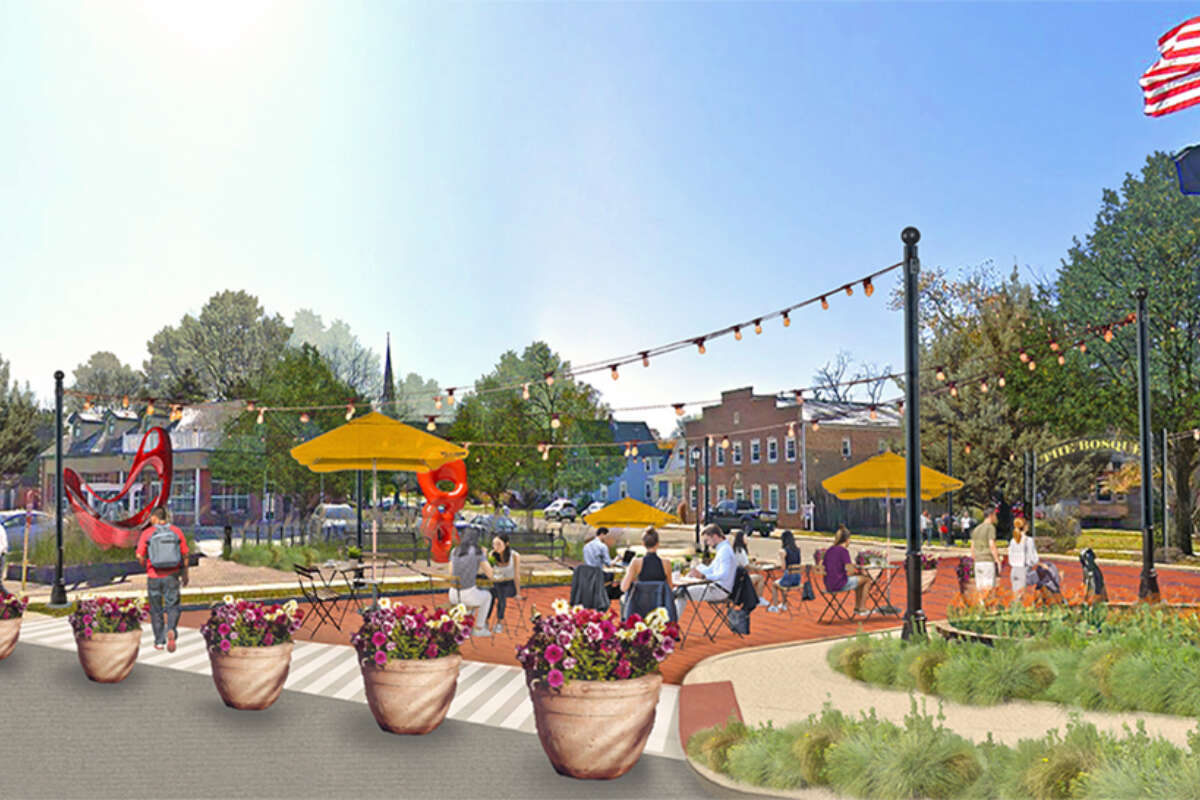
In 2019, the Village of Itasca partnered with the RTA to begin developing an updated downtown strategic action plan. With changes in the market including a younger demographic interested in downtown living, as well as alterations in traffic patterns due to the completion of IL-390 through the community, it was time for a refreshed vision for the Metra station and surrounding downtown district. Adopted in March, this is the first strategic plan for the downtown area in nearly 20 years and comes off of a 2015 village-wide comprehensive plan. By focusing on the downtown specifically, the plan has already led to some exciting, tangible projects, with more to come soon.
“The village saw an opportunity for some change in Itasca,” said Michael Horsting, Manager, Local Planning, for the RTA. “Itasca hasn’t seen a whole lot of change or redevelopment in their downtown area in a while, and they certainly have a lot in terms of space and land. They saw an opportunity to build on the existing strengths of their downtown and attract more people to live and work near the Metra station.”
“The younger generation look for different things from their downtown than I might've when I was a kid,” said Itasca Mayor Jeff Pruyn. “They're looking for more active nightlife, they don't want to have a car—these downtowns are transforming into more transit-oriented developments with a little bit higher density. The whole planning process, to me, was enlightening.”
Downtown Itasca is small, compact, and located directly adjacent to the Itasca Metra station. The downtown strategic action plan provides a strategy, development framework, and set of implementation actions to further enhance downtown and support the highest and best use of land surrounding the Metra station, focusing on areas like economic development, public open space and urban design, and access and mobility. Now that the plan has been adopted, the village has a detailed road map for implementing improvements to streetscapes, residential and commercial development, pedestrian connections, gathering spaces, the Metra station, and even creating a new, active sub-district with local restaurants, studios, boutiques, and lodging.
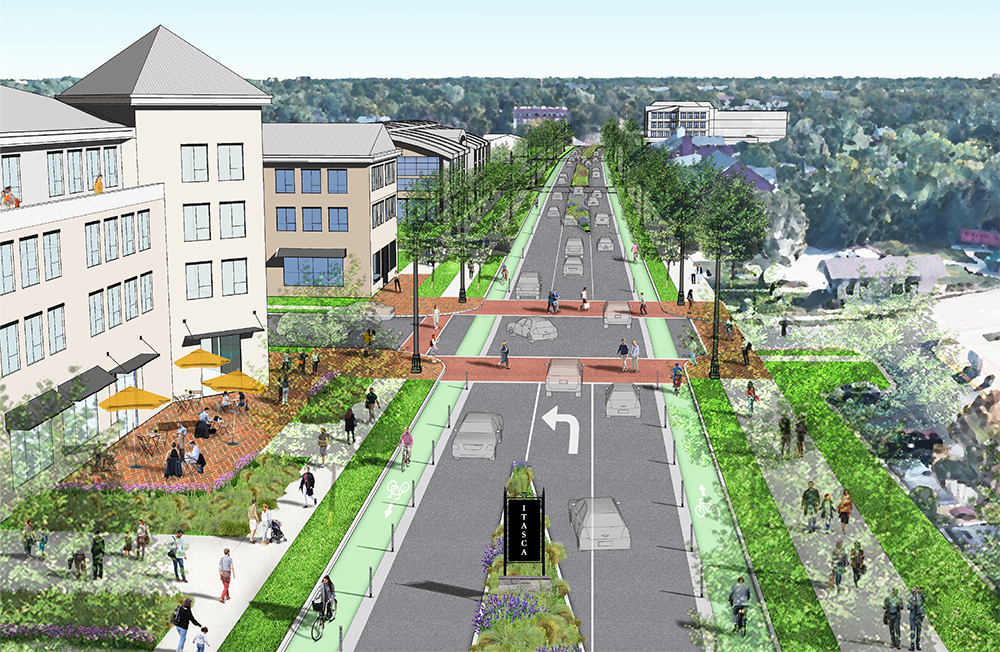
“One of the biggest recommendations was creating a new downtown node, a small district of the area west of the Metra station, in just the opposite direction of their current downtown core,” Horsting said. “It turns out the residents really loved the concept for this new western node of downtown, right on Irving Park Road. There are some assets there now—it’s their civic center with their library, police department, and a park. But building on that—bringing in some residential and retail elements to that area of downtown and finding a way for those new elements to feed off the existing civic core—the residents gravitated toward that and were excited by the possibilities.”
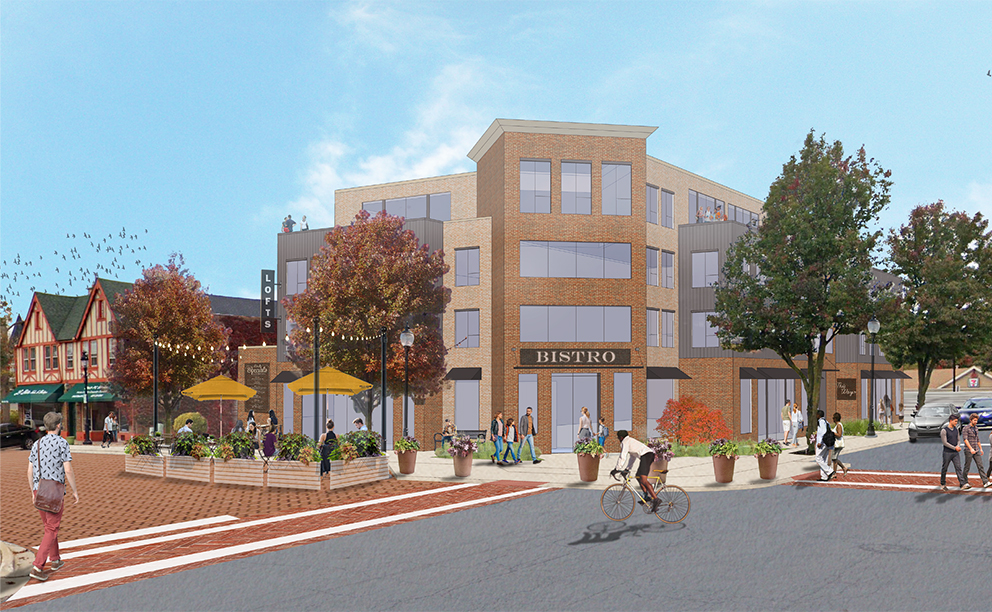
Mayor Pruyn said although the plan was only adopted a couple months ago, some implementation has already begun.
“We already have a developer under contract for a couple lots downtown to build an 80-plus-unit luxury apartment complex with first-floor retail,” he said. “We can put a restaurant in there, hopefully with some outdoor seating on the parkway, right across from the train station. Implementation is already taking place.”
Other recommendations include upgrades to the Metra station itself, like plaza improvements, seating, and bike parking, or even considering reuse of the train station building to a commercial or public access use. Enhanced pedestrian and bicycle access to the Metra station is also recommended, strengthening the connection between the north and south areas of downtown to the station and across Irving Park Road. Major intersection improvements could include promoting pedestrian safety. Aesthetic and pedestrian experience upgrades like landscaping, public art, lighting, seating, signage, and façade enhancements for properties that do not redevelop are also recommended.
The full plan and other completed Community Planning projects can be found on RTAMS, the RTA’s mapping and statistics website. The RTA will continue to monitor for implementation activity in Itasca.
Subscribe to our Newsletter
Related Articles
 NITA launches Rider Advisory Councils, now accepting applications
As NITA builds a unified, rider-focused transit system for the Chicago region, we are inviting riders to help shape that work directly. NITA is now accepting...
September 25, 2026 Ad Hoc Committee on the Transition to NITA issues final report
Between the June 1 effective date of the Northern Illinois Transit Authority (NITA) Act and the September seating and first meeting of the new NITA Board of ...
September 18, 2026 Meet NITA’s first Board Chair and Interim Executive Director
At its first meeting on September 10, the NITA Board of Directors selected two leaders who will help guide the new regional transit agency through its next p...
September 10, 2026 Northern Illinois Transit Authority Begins New Era for Regional Transit
New regional transit authority unifies CTA, Metra and Pace around shared vision for safer, more reliable and better-connected transitThe Northern Illinois Tr...
September 1, 2026 Study lays groundwork for more coordinated regional transit service under NITA
A new regional transit service coordination study will help bridge between current service planning practices and the first Northern Illinois Transit Authori...
August 3, 2026 RTA announces largest Access to Transit program, bringing $11 million of bicycle and pedestrian improvements to stations throughout region
The RTA has selected 21 new projects at a total cost of $10.9 million for its Access to Transit program, making it the largest round of funding in agency his...
June 24, 2026