RTA Board hears from guest speakers on how to ensure accessible and financially sustainable future for transit
January 6, 2022
January 6, 2022
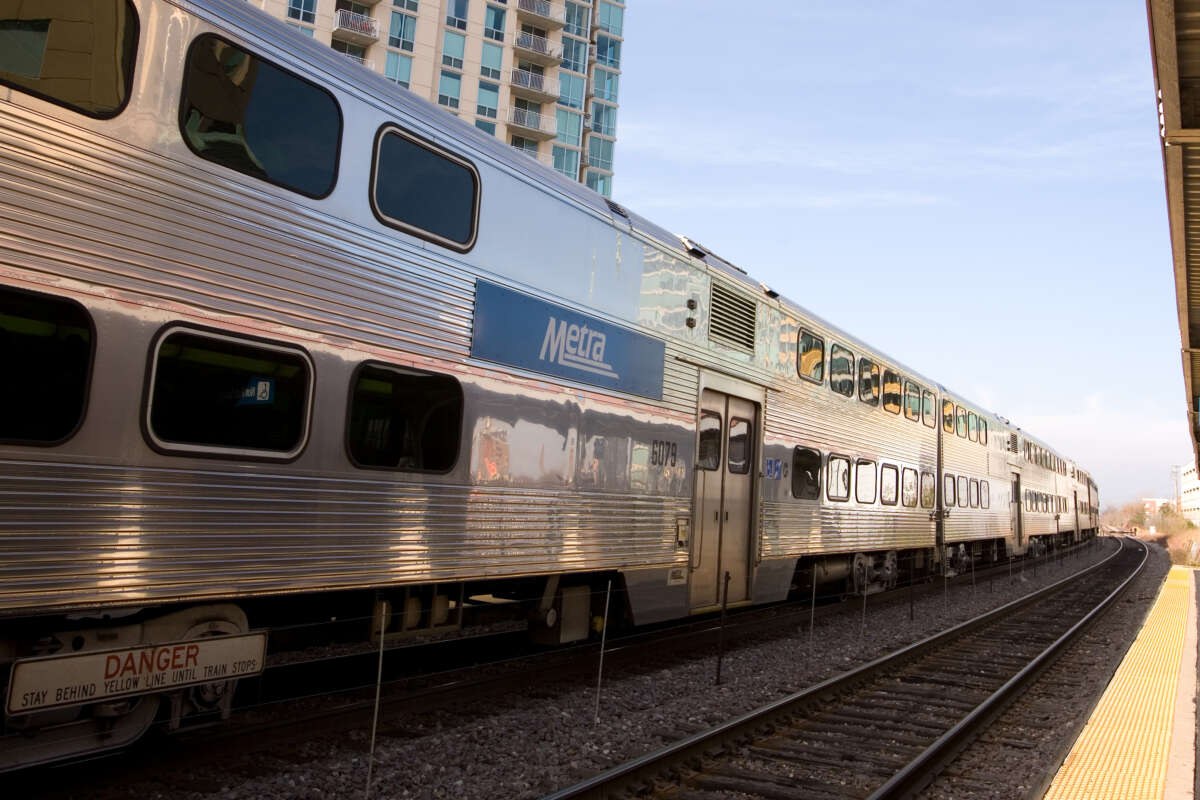
As the RTA continues development of its new regional transit strategic plan, the agency is committed to engaging in conversations about the future of public transit in Northeastern Illinois. Two guest speakers visited the December RTA Board of Directors meeting as part of Making a Plan — an engagement effort aimed at gathering and sharing initial input on the priorities, challenges, and opportunities that the regional transit strategic plan should address.
Dr. Judy Shanley, Assistant Vice President, Easterseals Education and Youth Transition Programs, shared her perspective on how the RTA’s strategic plan should address the mobility and transportation needs of all riders. And, Jim Aloisi, former Secretary of Transportation of Massachusetts, and current lecturer at MIT, discussed funding sustainability and system adaptation.
In her work with the National Center for Mobility Management, Shanley helps states and regions build networks of coordinated service among mobility providers, transportation agencies, human service organizations, and riders to facilitate access to healthcare, employment, and opportunity for individuals with disabilities, those experiencing low‑income and seniors. Dr. Shanley spoke about three major trends she is seeing in transportation planning nationwide: Integrated and innovative service, a strong focus on inclusion and equity, and transit agencies invigorating their systems.
“We're seeing transit agencies provide various modes and create continuums of inclusive service so there's less siloing, across the types of services that are provided,” Shanley said.
She also encouraged the RTA to think beyond traditional paratransit and continue to explore Mobility As A Service solutions and technology that can better connect riders to a variety of public and private transportation options. She also said it is important to think beyond the passenger trip and focus on access to transit for people with disabilities. “Think about universal design. If you can't get to a bus, or you can't get to a train, then it's all for naught.”
Jim Aloisi brought his years of experience working in transportation to speak to the RTA Board about the financial challenges and opportunities facing the future of public transit.
“There's a lot of talk these days about transit agencies across the country hitting a fiscal cliff when the federal COVID relief money runs out. What they are really saying is, we're not expecting pre-COVID ridership to return to 100 percent. We rely heavily on ridership for revenues and without it, we've got a problem,” he said.
He challenged the board to rethink the idea of balancing public revenue with ridership fares, also known as a recovery ratio. Gov. JB Pritzker recently signed a bill allowing the RTA relief from its state mandated recovery ratio for the next few years while pandemic recovery continues.
Aloisi gave an example of bus routes in Boston that are experimenting with free fares and saw ridership increase significantly. “Now, that's significant, if you care about things like getting more people, more access to opportunities, whether that's jobs, or healthcare, or education,” Aloisi said. “But it's problematic, if you're stuck with a fare recovery ratio that requires fares to balance the budget. It’s a dilemma that I think many agencies across the country will be dealing with looking to the future.”
He also spoke about frailties in other parts of the transit funding equation – for example, public transit in many places receives money from a local gas tax, but as more people buy electric cars that source of revenue will decline. “In Massachusetts, that's almost a billion-dollar funding gap that no one has a plan yet to figure out how to fill,” he said.
“At the same time, the time and the scale of transit ridership recovery is uncertain so fare revenue will remain diminished and unstable. Plus, agencies have additional operating costs, associated with higher intensity of cleaning vehicles, ventilation, moving to electric from diesel,” he said. “A lot of this stuff is politically challenging, I understand that. But I think it's time for people to give it thought, and to think about how to leverage these challenges and turn them into opportunities.”
Shanley and Aloisi’s perspectives in December added to the rich insights that have been shared with the RTA throughout Making a Plan. The RTA Board of Directors will not meet in January, but at its February 17 meeting, the Board will hear a report on what priorities and observations from the Making a Plan engagement period. Watch the full December RTA Board of Directors meeting on YouTube. Subscribe to receive the latest news and updates from the RTA.
Subscribe to our Newsletter
Related Articles
 NITA launches Rider Advisory Councils, now accepting applications
As NITA builds a unified, rider-focused transit system for the Chicago region, we are inviting riders to help shape that work directly. NITA is now accepting...
September 25, 2026 Ad Hoc Committee on the Transition to NITA issues final report
Between the June 1 effective date of the Northern Illinois Transit Authority (NITA) Act and the September seating and first meeting of the new NITA Board of ...
September 18, 2026 Meet NITA’s first Board Chair and Interim Executive Director
At its first meeting on September 10, the NITA Board of Directors selected two leaders who will help guide the new regional transit agency through its next p...
September 10, 2026 Northern Illinois Transit Authority Begins New Era for Regional Transit
New regional transit authority unifies CTA, Metra and Pace around shared vision for safer, more reliable and better-connected transitThe Northern Illinois Tr...
September 1, 2026 Study lays groundwork for more coordinated regional transit service under NITA
A new regional transit service coordination study will help bridge between current service planning practices and the first Northern Illinois Transit Authori...
August 3, 2026 RTA announces largest Access to Transit program, bringing $11 million of bicycle and pedestrian improvements to stations throughout region
The RTA has selected 21 new projects at a total cost of $10.9 million for its Access to Transit program, making it the largest round of funding in agency his...
June 24, 2026